Essential checklist of all documents required for a court/registry wedding in Nigeria. Learn what to prepare before the wedding day and bring with you to the registry.
Your Checklist for a Nigerian Civil Wedding
Planning a civil (court or registry) wedding in Nigeria requires careful preparation and gathering of specific legal documents. While exact requirements may vary slightly by registry, this comprehensive guide covers what couples typically need.
Documents to Prepare BEFORE the Wedding Day
1. Birth Certificates or Declaration of Age
- Original birth certificate from the hospital or Local Government Area (LGA)
- OR Declaration/Affidavit of Age (sworn before a magistrate or notary) if birth certificate is unavailable
- Requirement: Both parties must provide this
- Tip: If your birth certificate is old or worn, request a certified copy from your LGA
2. Passport Photographs
- Requirement: Usually 6-8 recent passport photographs per person
- Specifications:
- 4x6 inches or 35mm x 45mm
- Colored or black and white
- White background
- Clear face view
- Taken within the last 3-6 months
- Tip: Have extras printed in case the registry requests more
3. Valid Means of Identification
Choose ONE of the following (for each party):
- National ID Card (NIN) — National Identification Number card issued by NIMC
- International Passport — Valid Nigerian passport
- Driver's License — Valid driver's license issued by the state
- Voter's Card — Permanent voter's card from INEC
Requirement: Must be current and valid (not expired) Tip: Bring photocopies (2-3) in addition to the original
4. Sworn Affidavit of Bachelorhood/Spinsterhood
- What it is: A legal document sworn before a court or notary confirming that both parties are legally free to marry
- Why it's needed: To prove neither party is already married or in a legal marriage
- How to obtain:
- Contact your Local Government Area court or a notary public
- Provide your details and identification
- Swear an affidavit stating your marital status
- Pay a small fee (typically ₦500-₦2,000)
- Receive the certified affidavit
- Requirement: Dated within 3 months of application to the registry
- Tip: Start this process early—sometimes courts are busy
5. Proof of Residence (If Requested)
- What qualifies:
- Valid utility bill (electricity, water) in your name
- Tenement rates receipt
- Land registration document
- Lease agreement
- Property tax receipt
- Requirement: Recent (usually dated within 3 months)
- Tip: Check with your specific registry about whether this is mandatory
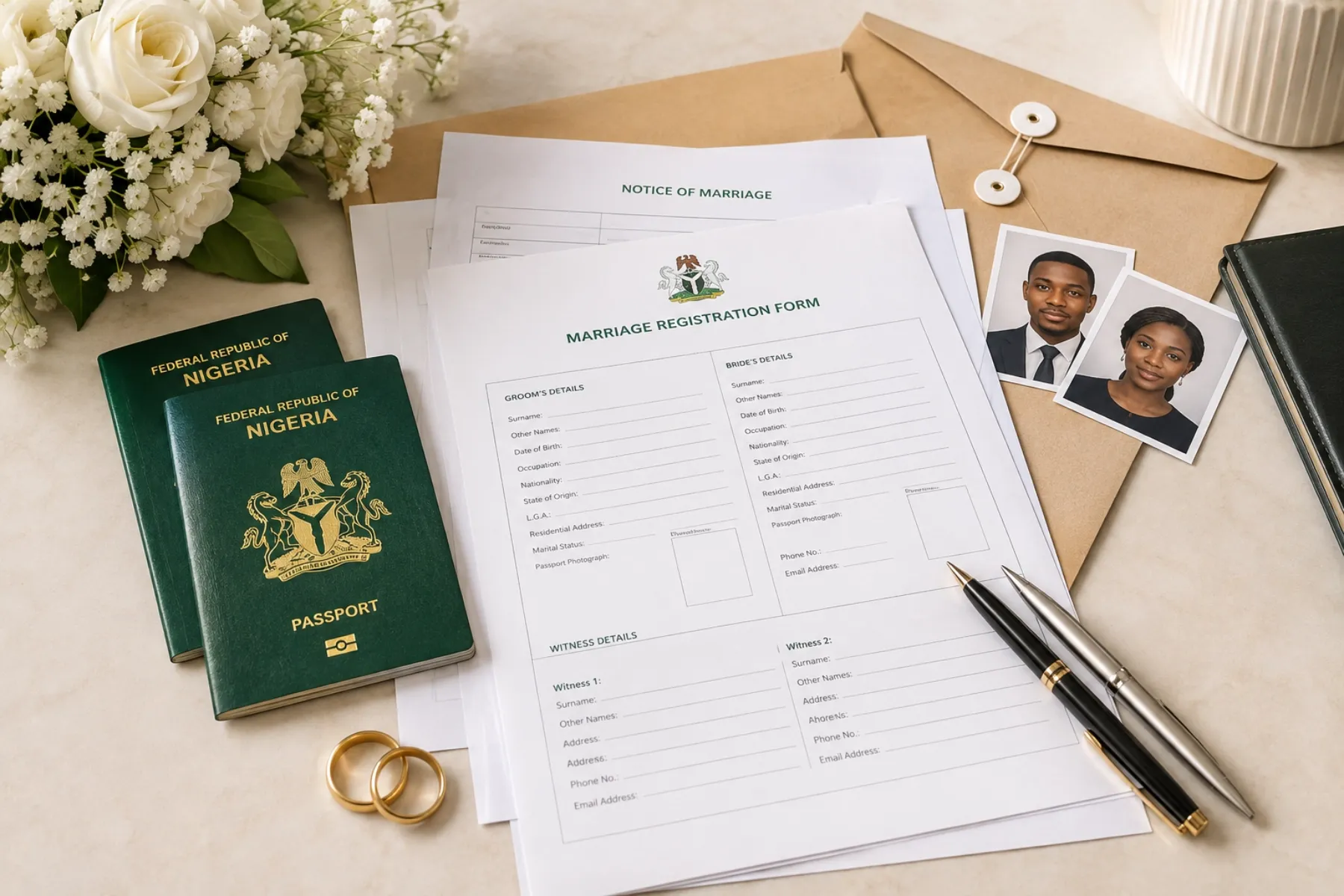
6. Completed Marriage Notice Form
- What it is: The official form filed at the registry to initiate the marriage process
- How to obtain: At the marriage registry office
- Information needed:
- Full names of both parties
- Dates of birth
- Addresses
- Parents' names and occupations
- Witnesses' details
- Proposed wedding date
- Requirement: Must be submitted at least 21 days before your intended wedding date
- Tip: Complete this form accurately—errors can delay your process
7. Additional Documents (If Previously Married)
If Divorced:
- Decree Absolute — The final court document ending your previous marriage
- Original or certified copy from the court
- Tip: Ensure the Decree Absolute clearly states it is final and absolute
If Widowed:
- Death Certificate of former spouse
- Original or certified copy from the hospital or LGA
- Marriage certificate from the previous marriage
- Tip: This proves your legal status and right to remarry
Documents to Bring on the Wedding Day
Essential Items
1. The Couple
- Both bride and groom must be present in person
- Registrars will not conduct marriage ceremonies if either party is absent
- Tip: Arrive at least 30 minutes early
2. Witnesses
- Minimum: Two witnesses (one representing each party)
- Ideally: 4-8 witnesses (some registries recommend more)
- Requirements for witnesses:
- Must be at least 18 years old
- Must have valid identification (ID, Passport, Driver's License)
- Must be mentally sound and able to testify
- Cannot be under the influence of alcohol or drugs
- Preferably not minors
- Tip: Brief your witnesses beforehand on what to expect
3. Original Copies of All Pre-submitted Documents
- Bring originals of:
- Birth certificates or age declaration
- Valid identification
- Affidavit of bachelorhood/spinsterhood
- Previous documents (divorce/death certificates if applicable)
- Why: Registrars verify originals even if you submitted photocopies earlier
- Tip: Keep everything organized in a folder
4. Marriage Payment Receipts
- What it is: Proof of payment for marriage registration and services
- When you get it: After submitting documents and paying fees to the registry
- Amount: Typically ₦2,000-₦5,000 depending on the registry
- Tip: Keep this receipt safe—you'll need it on wedding day
5. Registry-Issued Documents
- Any forms or documents the registry gave you during the application process
- Your marriage notice acknowledgment
- Any correspondence from the registry
- Tip: Keep everything in order; registries may ask for specific documents
6. Marriage Rings (Optional but Common)
- Requirement: Not mandatory but traditionally exchanged
- Tip: Ensure rings are comfortable; you'll be wearing them all day
- Note: Some registries have simple ceremonies; plan accordingly
Timeline & Important Dates
The 21-Day Statutory Notice Period
This is the most critical deadline in civil marriage in Nigeria.
- When: You must submit your marriage notice to the registry at least 21 days before your intended wedding date
- Why: Nigerian law requires this waiting period to allow for public notice and any objections
- After 21 days: If no objections are raised, the registrar issues approval and you can proceed
- Example: If you want to marry on August 30th, you must file by August 9th at the latest
Recommended Timeline
6-8 Weeks Before Wedding:
- Start gathering documents
- Get affidavits sworn
- Order birth certificates if needed
- Take passport photographs
4-5 Weeks Before Wedding:
- Submit all documents to registry
- Complete marriage notice form
- Pay registration fees
- Confirm wedding date with registry
3 Weeks Before Wedding:
- Follow up with registry on approval
- Arrange your witnesses
- Plan the ceremony details
- Confirm all documents are in order
1-2 Weeks Before Wedding:
- Final check on all documents
- Brief witnesses on the ceremony
- Plan what to wear
- Confirm time with registry
Wedding Day:
- Arrive early
- Bring all original documents
- Bring your witnesses
- Be ready to sign
Registry-Specific Information
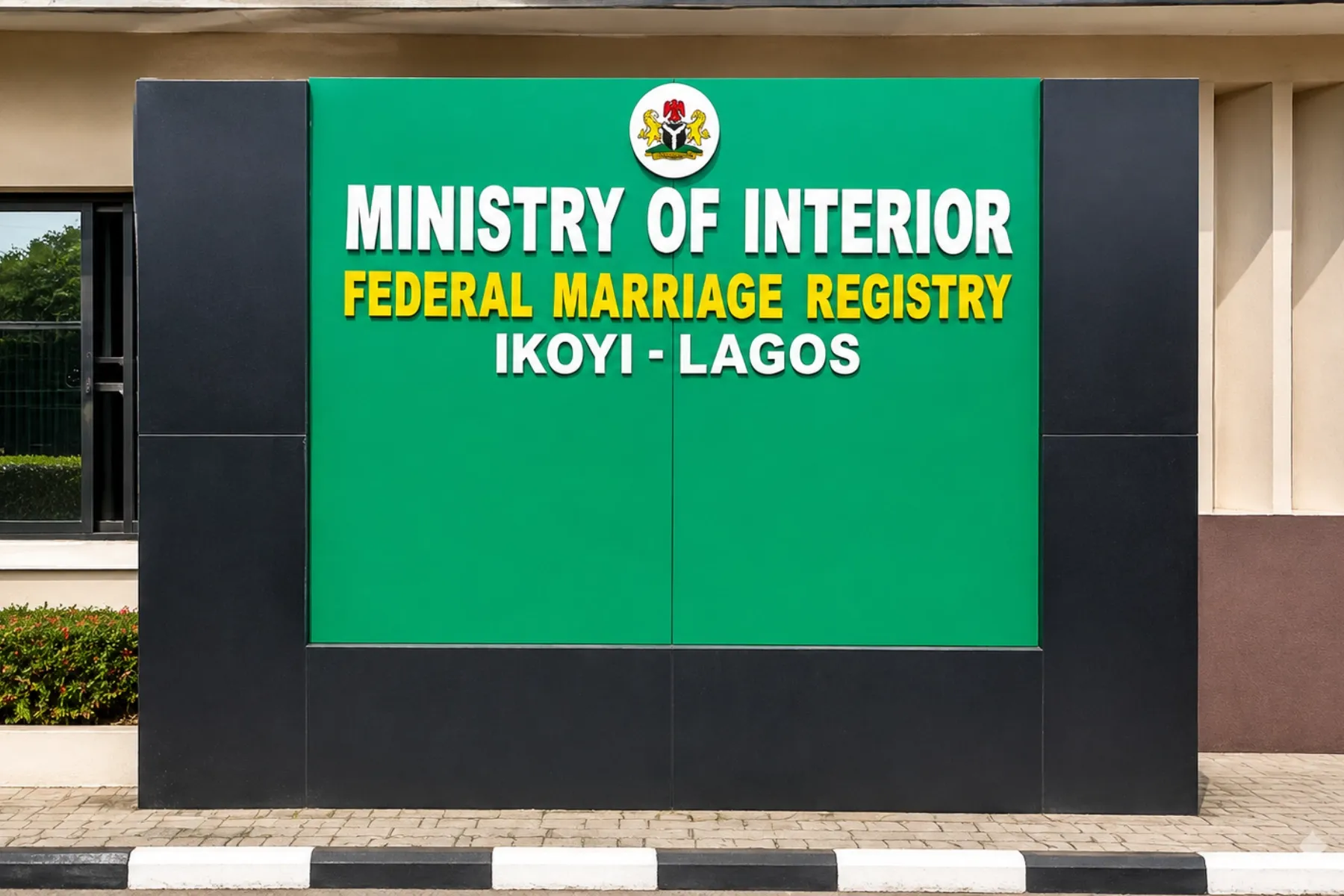
Federal Marriage Registry, Ikoyi (Lagos)
- Additional requirements: May request extra documentation
- Tip: Call ahead to confirm current requirements: Many requirements change
- Note: Ikoyi is not the only registry in Nigeria; check if there's one closer to you
Other Marriage Registries in Nigeria
- Ota Registry (Ogun State)
- Other State/Local Government Registries
- Tip: All issue legally valid marriage certificates recognized nationwide
Important Tips for Success
1. Start Early
Don't wait until 2 weeks before your intended wedding. Bureaucracy moves slowly; give yourself time.
2. Photocopy Everything
Make 2-3 copies of every document. Keep originals safe and bring copies everywhere.
3. Make Friends with the Registry Staff
Be polite and professional when dealing with registry staff. They are processing hundreds of applications.
4. Call Before Visiting
Don't assume offices are open or that specific people are available. Call ahead.
5. Keep Records
Write down:
- Names of registry staff who help you
- Reference numbers for your application
- Dates you submitted documents
- Confirmation of your wedding date
6. Ask Questions
If you're unsure about any requirement, ask the registry directly. It's better to clarify than to prepare the wrong documents.
7. Double-Check Dates
Confirm your wedding date multiple times. Date errors can cause serious delays.
8. Be Prepared for Changes
Registry requirements can change. What your friend submitted may differ from what you need.
9. Plan B
If something goes wrong and your original date is threatened, have a backup date available.
10. Consider Professional Help
If the process feels overwhelming, engage a lawyer or wedding planner who handles civil weddings. The small fee is worth the peace of mind.
Common Documents Mistakes to Avoid
❌ Expired identification ✅ Ensure all IDs are current
❌ Affidavit older than 3 months ✅ Get a fresh affidavit close to your wedding
❌ Wrong passport photo specifications ✅ Get photos from a professional who knows the requirements
❌ Incomplete marriage notice form ✅ Fill out every field; incomplete forms are rejected
❌ Missing divorce decree (if previously married) ✅ Get a certified copy from the court
❌ Wrong birth certificate (e.g., baptism certificate instead) ✅ Get the original hospital/LGA birth certificate
❌ Bringing the wrong witness ✅ Ensure witnesses have valid ID and meet requirements
❌ Not accounting for the 21-day notice period ✅ Mark this deadline on your calendar immediately
Getting Your Marriage Certificate
After your civil ceremony is completed:
- You sign the marriage register in the presence of witnesses and the registrar
- The registry issues your marriage certificate (usually same day or within days)
- This certificate is your proof of legal marriage and is recognized nationwide and internationally
- You can request additional certified copies for immigration, visa, or other purposes
Final Thoughts
A civil wedding in Nigeria requires patience, organization, and attention to detail. However, once you have navigated the documentation process, the ceremony itself is typically quick, straightforward, and meaningful. Many couples combine their civil wedding with a larger traditional or religious ceremony, making it part of a larger celebration.
The investment of time in getting your documents right ensures that your marriage is legally valid, protected, and recognized everywhere—from immigration offices to inheritance law.
Need help navigating the civil wedding process in Nigeria? Contact us for guidance on coordinating your registry wedding with your larger celebration.